
The references still in circulation
Renovation Notes has recorded 230 withdrawn or superseded British Standards that it says are still presented as current in UK building guidance. Its founder and editor, Gediz Karaca, set out the roofing references needing attention in an article published by Roofing Today on 29 September 2026. Renovation Notes is an independent library covering renovation costs, planning, building regulations and structural matters.
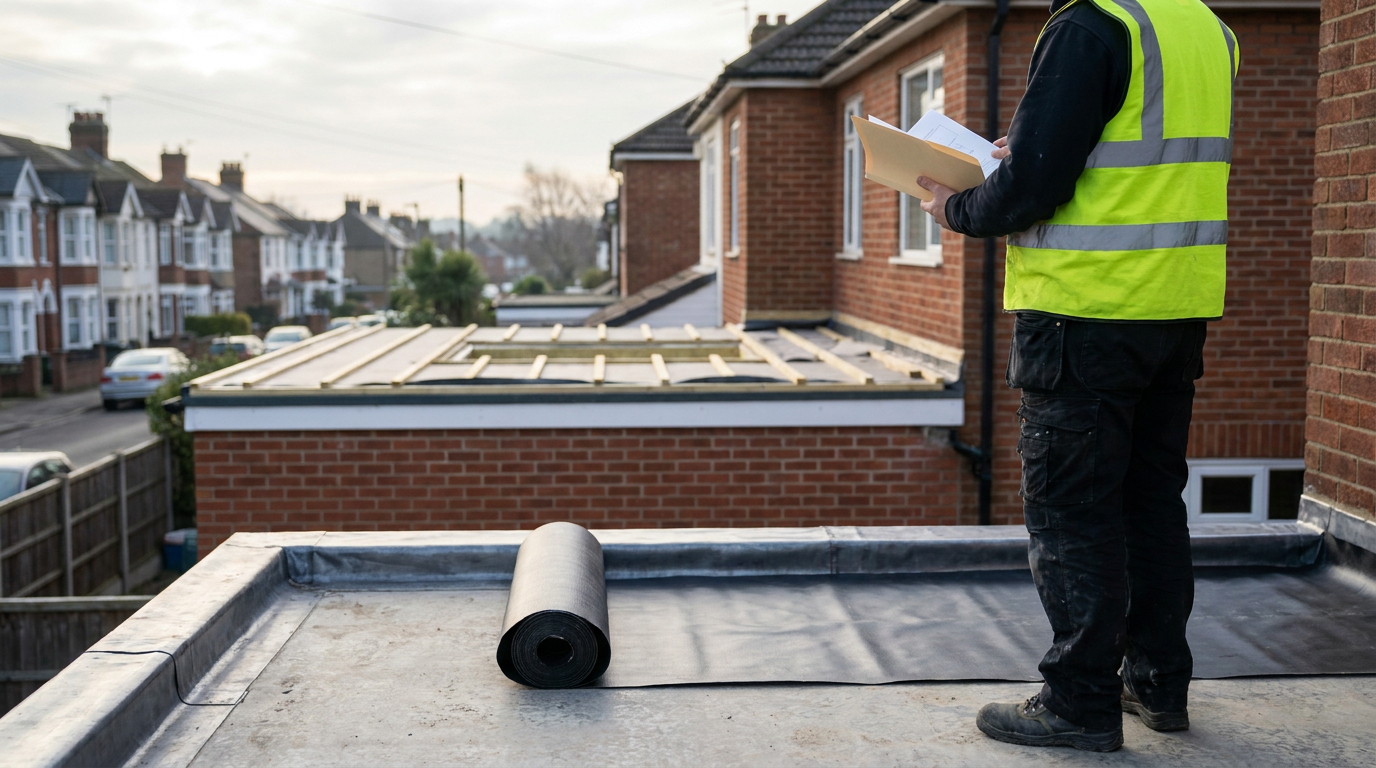
Among the changes identified is the replacement of the flat roofing code BS 6229:2018. According to the article, that edition was withdrawn in December 2025 and superseded by BS 6229:2025, covering flat roofs with continuously supported flexible waterproof coverings. References to the 2018 edition remain in guidance, product information and specification clauses.
Karaca advises contractors pricing flat roofing work from specifications prepared before 2026 to check the edition cited. He distinguishes between an outdated reference and an incorrect roof design: citing the withdrawn edition does not, by itself, establish that the roof is wrong. His warning concerns the reference recorded in the contract paperwork and its relevance if a dispute arises.
Slating, tiling and moisture
For pitched roofing, the article identifies BS 5534:2014+A2:2018 as the current slating and tiling code. The 2003 edition was withdrawn in 2015 but continues to appear in guidance. Karaca says the current code changed the approach to wind uplift and moved away from relying on mortar bedding alone to secure ridges, hips and verges. The differences therefore extend beyond the date attached to the document.
The separate workmanship standard has also been replaced. BS 8000-6:2023 superseded BS 8000-6:2013 and covers slating and tiling on walls as well as roofs. The article recommends updating method statements that still refer to the 2013 version. Its replacement has a wider stated scope, making the reference relevant to wall tiling and slating work as well as roof installation.
Moisture assessments require a check of clause references, not just edition dates. BS 5250:2011+A1:2016 was withdrawn in 2021 and replaced by BS 5250:2021, titled Management of moisture in buildings. Clause numbering changed in the replacement. According to Karaca, a condensation risk statement carried forward from an older roof specification may consequently direct the reader to the wrong clause.
Fire classifications
The article also reports the withdrawal of parts 4, 6, 7 and 11 of BS 476, among the documents used for fire classification of roofing and insulation products. It identifies these as another group of references requiring attention when reviewing specifications and product information.
Karaca says older descriptions, including “Class 0” and “Class 1 surface spread of flame”, remain in circulation. For England, he identifies European classification under BS EN 13501-1 as the recognised route. Where product information gives only the older descriptions, his recommendation is to request the product's current classification.
Checking project documents
The practical recommendation is to review every standard cited in a specification or method statement before work begins, with particular attention to documents produced from older templates. Current editions can be checked through the BSI Knowledge catalogue. Renovation Notes also maintains a withdrawn standards register giving replacement references and withdrawal dates, which the article says is checked nightly.
Karaca links those checks to warranties, building control discussions and handover. A roof constructed to a current standard can still attract questions if its supporting documents cite a withdrawn edition. He also notes that some material specifications were replaced by European standards long ago. While those old references rarely cause problems on their own, he regards their continued use as evidence that a specification has been copied forward without its references being reviewed.