
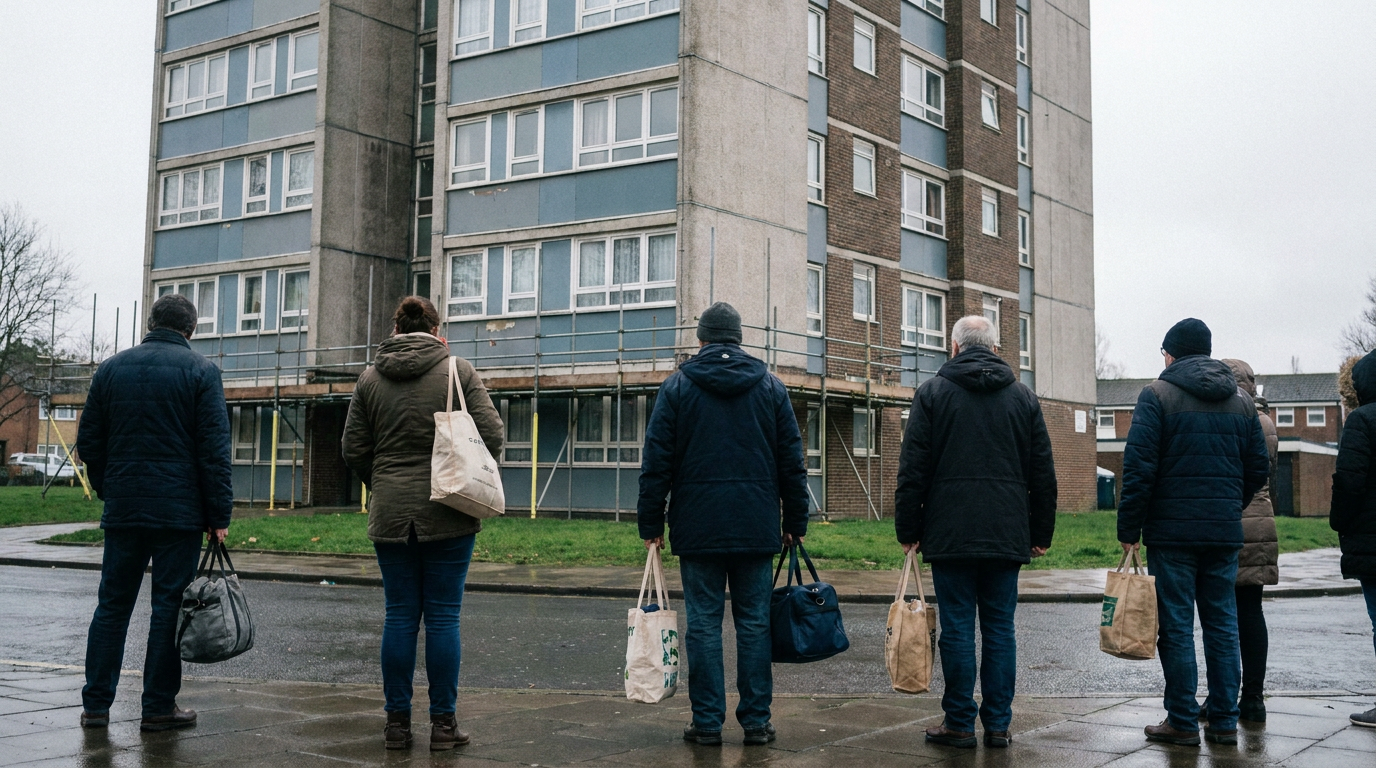
Residents displaced by a fatal fire
Natasha Parcell, 33, is staying in a hotel after a fatal fire forced her to leave the east London tower block where she owns a flat. According to BBC UK, one person died in the blaze at the building in Poplar. Parcell left with plastic bags containing clothes.
Residents had received approval for the removal of all the building’s flammable cladding the day before the fire. Parcell told the BBC she feared the change in assessment rules could give the developer grounds to reconsider that decision.
Barratt Redrow, which developed the building, told the BBC that its plans had not changed. It said it still intended to remove all the flammable cladding as soon as possible, regardless of the new rules.
The dispute comes against a wider backlog of work following the Grenfell Tower fire. The BBC reported that almost 3,000 UK tower blocks with dangerous cladding still needed repairs.
How the assessments would work
The BBC described the PAS9980 changes as introducing four classifications for the fire risk presented by a tower block’s cladding system: high, medium, tolerable and low. Under its account of the requirements, removal would be required only for systems placed in the high or medium groups.
Flammable cladding could be present in any of the four classifications, the broadcaster reported. The distinction between the groups would therefore concern the assessed risk of the system, rather than whether every material in it was non-flammable.
Cladding campaigners told the BBC they believed this placed too much weight on individual fire safety assessors’ decisions. They questioned the independence of the appointments, saying assessors were often employed by the building’s freeholder or developer.
The government declined the BBC’s request for an interview. In a written response, the Ministry of Housing said the approach would accelerate cladding removal and make decisions on a complex issue more proportionate and consistent. It also said buildings would be audited after repairs to check that the work had been completed properly.
Dispute over the scope of repairs
Campaigners want the assessment and repair process to cover fire safety defects throughout tower blocks, rather than concentrating on their external cladding. Their concern extends to defects elsewhere in a building that could remain after work to its outside walls.
Ed Daffarn, who warned about the risks of adding cladding to Grenfell Tower and witnessed the fire, criticised the continuing disagreement over what constituted a safe building. He told the BBC that responsibility lay with governments of both political parties, as well as the fire safety industry and developers.
Daffarn said the construction industry should be required to correct other fire safety defects where buildings had failed to meet the regulations applicable when they were built. The BBC reported that this consideration had been removed from the new rules.
The insurance industry also supports addressing defects beyond cladding, according to the BBC. The Association of British Insurers said all flammable cladding should be removed, a position that goes further than retaining material where an assessment finds the risk tolerable or low.
Insurance and mortgage concerns
Parcell said her buildings insurance rose by 94% after residents were told a fire risk assessment had found that the cladding needed to be removed. That increase followed the assessment of the building, rather than the subsequent fire.
Because her flat is leasehold, the insurance premium forms part of her maintenance charges. Those charges are now nearly £8,000 a year. The figure covers the maintenance charges as a whole, not just the insurance premium.
Parcell told the BBC that within her first year of ownership she had been informed that the flat was no longer safe or mortgageable. She and other residents fear that incomplete repairs could leave insurance costs high and prevent them from selling or obtaining mortgages on their homes.
Their concern is that removing some risks without addressing all fire safety defects would leave those financial problems unresolved. Parcell said buying her first home had instead left her facing uncertainty about whether it was safe to live in.