What happened
Data from the Microgeneration Certification Scheme (MCS) shows that the UK has exceeded its previous annual record for rooftop solar installations in 2026. More than 269,000 MCS-certified solar panels have been installed on homes and small businesses so far this year. This already surpasses the 2025 total, despite six weeks remaining in the calendar year, according to MCS figures.
Certified battery storage installations are also increasing rapidly. Around 75,400 certified battery installations have been completed so far this year. According to MCS, 82% of these have been fitted alongside solar panels during the same project.
The background
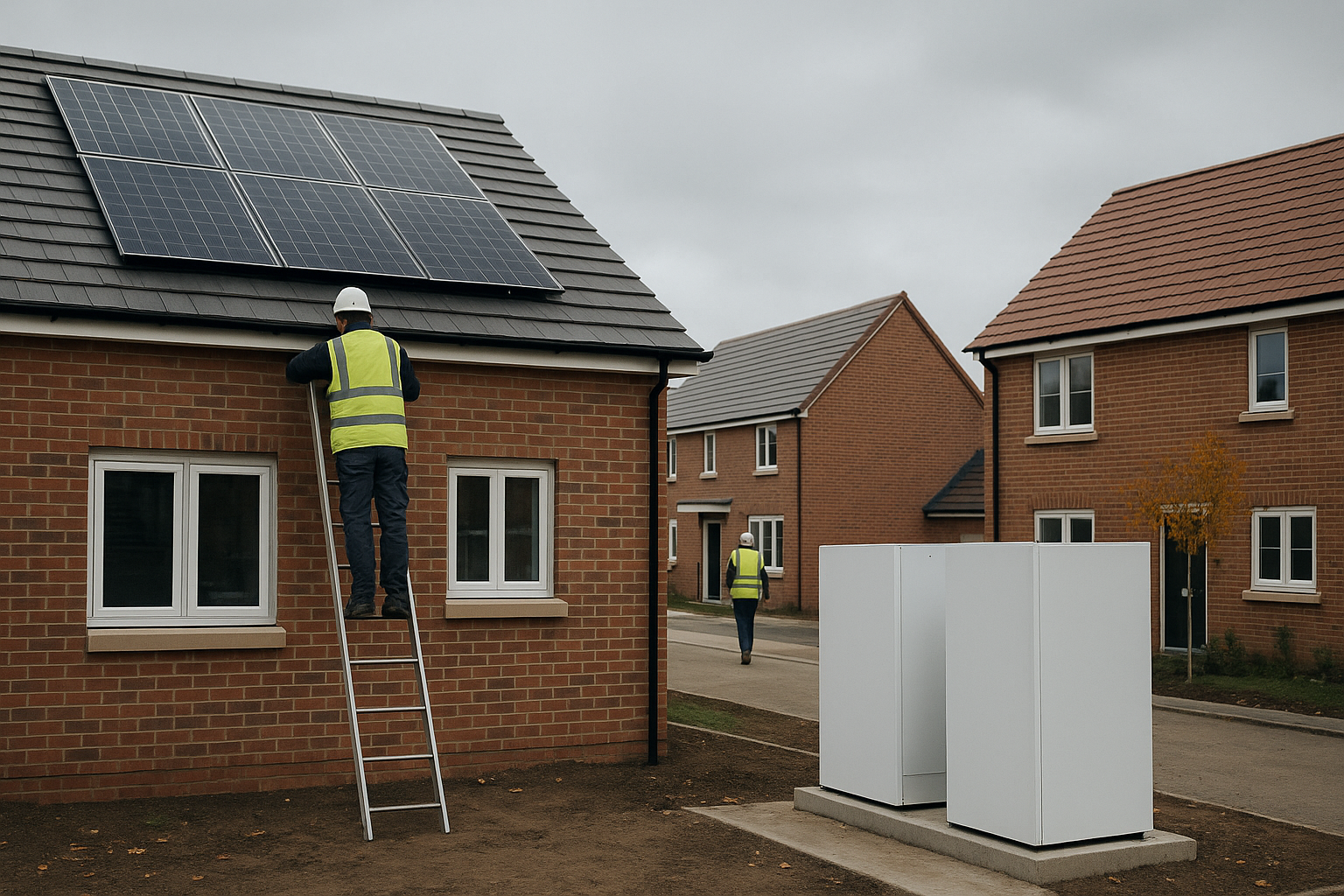
MCS is the accredited registration body for UK renewables. Its data tracks the deployment of verified solar and battery storage systems across the country. The current growth in rooftop solar comes as the market for new build installations expands, with almost one in three new panel systems fitted to new build homes in 2026.
The government is planning to introduce the Future Homes Standard from 2028. According to Roofing Today, this will require most new homes in England to include solar panels as standard. The policy is aimed at speeding up the transition to low-carbon homes, driving further demand for solar panel systems on new build sites across the country.
Battery storage is often installed in tandem with solar, either as an addition to existing systems or at the time of initial installation. According to MCS, the surge in battery deployments reflects a growing preference for integrated renewable energy systems in the domestic and small business market.
Regional detail
Certain local authorities are seeing especially high uptake. Cornwall has recorded 3,399 certified installations so far in 2026, while Somerset has seen 3,325 and North Yorkshire 3,094. These three regions have the highest number of installations according to the MCS data update. The data highlights regional differences in uptake, with southern England showing particularly strong growth.
What people are saying
Lisa Cooke, managing director of MCS, said that more people are investing in multiple technologies for their homes as confidence in renewables increases. Cooke said that preparations for the Future Homes Standard will create further growth, especially in the new build market segment.
She argued that the rise in new and unfamiliar technologies makes quality assurance more important. Cooke said that MCS has redeveloped its installer scheme to focus on quality, moving towards a consumer protection model. She suggested that MCS certification assures homeowners that both installers and products meet industry-recognised standards.
Chris Hewett, chief executive of Solar Energy UK, said the industry is seeing growth at all scales. Hewett estimates over 300,000 installations could be achieved by the end of 2026. He pointed to the Warm Homes Loan Scheme as providing cheap finance in support of solar uptake, alongside forthcoming regulations for new homes. He said he expects further increases in solar deployments in 2027.
What happens next
The Future Homes Standard is due to take effect in 2028, essentially mandating solar panels for the majority of new homes. This is expected to continue expanding the new build market for rooftop solar. Data from MCS will continue to track annual and regional trends in certified installations.
Battery storage is expected to grow alongside solar, as consumers and small businesses install integrated systems to store excess generated power. According to MCS, demand for quality assurance in these installations will grow, with both regulation and consumer choice influencing market behaviour.
The Warm Homes Loan Scheme and other financing routes remain in place, making solar more accessible to a wider customer base. Further updates are expected from the MCS Data Dashboard as installation figures rise towards the end of the year.