
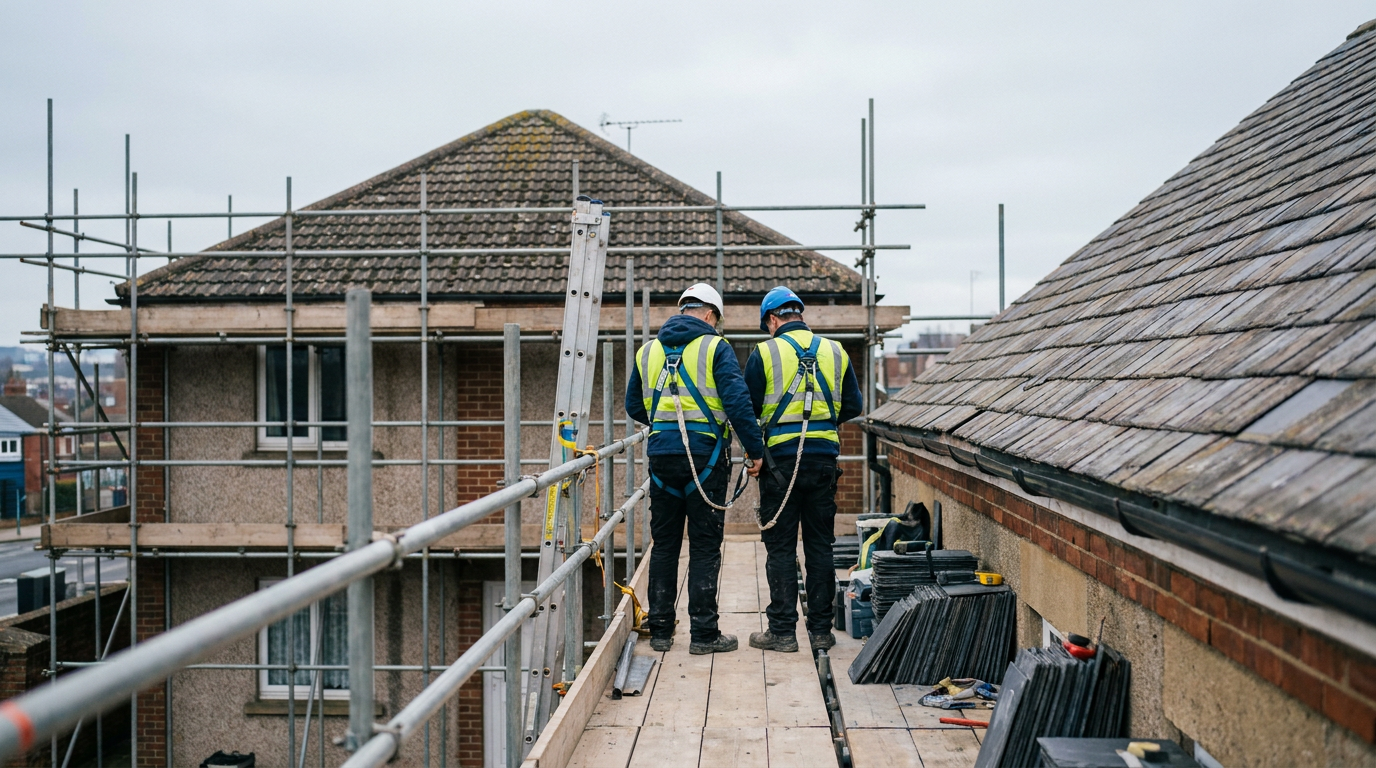
Short jobs still need fall controls
Replacing a single tile, inspecting flashing and removing debris from a gutter all involve decisions about protection from falls, according to a Roofing Today blog published on 21 September 2026. The time needed to complete a task can affect the equipment chosen, but does not remove the need to control the risk.
The article identifies fragile roofing, exposed edges, weather and changes to access as hazards that can occur together. It notes that falls from height remain a major cause of deaths at work in Great Britain. It gives no fatality figures or individual accident examples.
For brief maintenance visits, the judgement is whether a straightforward means of access is suitable or whether more extensive arrangements are needed. Roofing Today says experience should help workers make that distinction, rather than encourage them to treat familiar jobs less carefully.
Choosing the method before the harness
The Work at Height Regulations require employers to organise and plan work properly. As described by Roofing Today, the Health and Safety Executive's guidance places avoiding work at height first, wherever that is reasonably practicable. Where it cannot be avoided, the next priority is preventing a fall.
Measures to limit how far someone falls and the resulting harm come after prevention in that hierarchy. The article therefore argues against treating a harness as the default answer to every roof task. Collective protection needs consideration before selecting equipment worn or used by an individual.
The equipment familiar to roofers includes scaffolding, guardrails, roof ladders, anchors, lanyards and restraint systems. The choice between them depends on what the worker will do and the roof they will work on. Having equipment available does not establish that it suits the task.
Roofing Today also links workers' understanding of the chosen method to whether they follow it. Instruction should explain decisions such as rejecting ladder access or choosing a restraint arrangement rather than fall arrest. That explanation concerns the purpose of the control, not just how to use its components.
Getting people and materials onto the roof
A safe working position does not account for every movement needed to reach it. The article highlights transfers from ladders, passage through scaffolding, journeys across fragile areas and restricted openings through which workers may carry tools. Each can introduce a hazard before the main task begins.
Access arrangements also need checking as the site changes. Deliveries, stored roofing products, discarded materials and tools can obstruct a route that was usable when work started. Roofing Today recommends reassessing those routes during the job, rather than relying only on the initial setup.
Moving materials can change the protection needed on the same roof. An arrangement suitable for an inspection may not suit someone carrying sheets, rolls or equipment. Loads can interfere with balance, limit the worker's view or become difficult to control in wind.
The article identifies mechanical lifting, alternative delivery locations and different storage arrangements as ways to reduce carrying at height. Where manual movement remains necessary, workers need a method that preserves secure access and allows them to use the fall-protection equipment correctly.
Fragile surfaces and changing weather
Roof condition cannot be judged by appearance alone. Rooflights, ageing sheets and materials weakened by deterioration may give way under a worker. The article urges training to address the surface beneath a person's feet, rather than concentrating attention exclusively on roof edges.
According to Roofing Today's account of HSE guidance, access onto fragile roofs should be avoided where possible. Where it is necessary, suitable working platforms, staging or other protective measures are needed. The hazard is a fall through the roof, as well as a fall from its perimeter.
Weather can alter the job after work has started. Rain or ice can make a previously secure surface slippery, while wind can make materials harder to handle. The article also identifies heat as a condition that can affect roofing work within a short period.
Changes in the area being worked on can affect how a restraint line lies and operates. Roofing Today says workers need both the confidence and the authority to pause the task and revise arrangements when conditions change. Stopping should not be treated simply as an obstacle to productivity.
Equipment checks and the limits of a course
Workers using harnesses and lanyards need to understand whether the components are compatible, what condition they are in and the limits of their use. The article recommends checks before use alongside detailed inspections that are formally recorded. Inspection frequency should take account of use and working conditions.
Harness training can help those responsible for equipment identify its parts, recognise common faults and understand inspection criteria. Roofing Today distinguishes that knowledge from the employer's responsibility to maintain an inspection regime suited to the equipment. Manufacturer information is among the factors that should inform it.
The blog names Working at Height in Construction as an example of a course covering principles, equipment and safe practices. It says this type of awareness training does not remove the contractor's need to provide instruction, supervision and planning for the particular roof and equipment involved.
Preparing to recover a suspended worker
Fall arrest can prevent someone from striking a level below them without resolving the emergency. A worker left hanging in the system still needs to be recovered safely. Roofing Today says that recovery must be considered before the work begins, rather than after an incident.
Preparations need to identify where a person might fall, the route rescuers could use to reach them and the equipment available for recovery. These are questions about the actual working position and the resources on hand, not simply whether a fall-arrest system has been supplied.
Contacting the emergency services can be part of the response. The article says the arrangements made beforehand must nevertheless address how the suspended person can be reached and brought to safety using available resources. An emergency call is therefore only one element of the recovery arrangements described.