
Glazing and drainage
London Liverpool Street recorded 98 million passenger entries and exits last year, making it Britain’s busiest station, according to Roofing Today. The outlet reported the completion of the roof works on 6 October 2026.
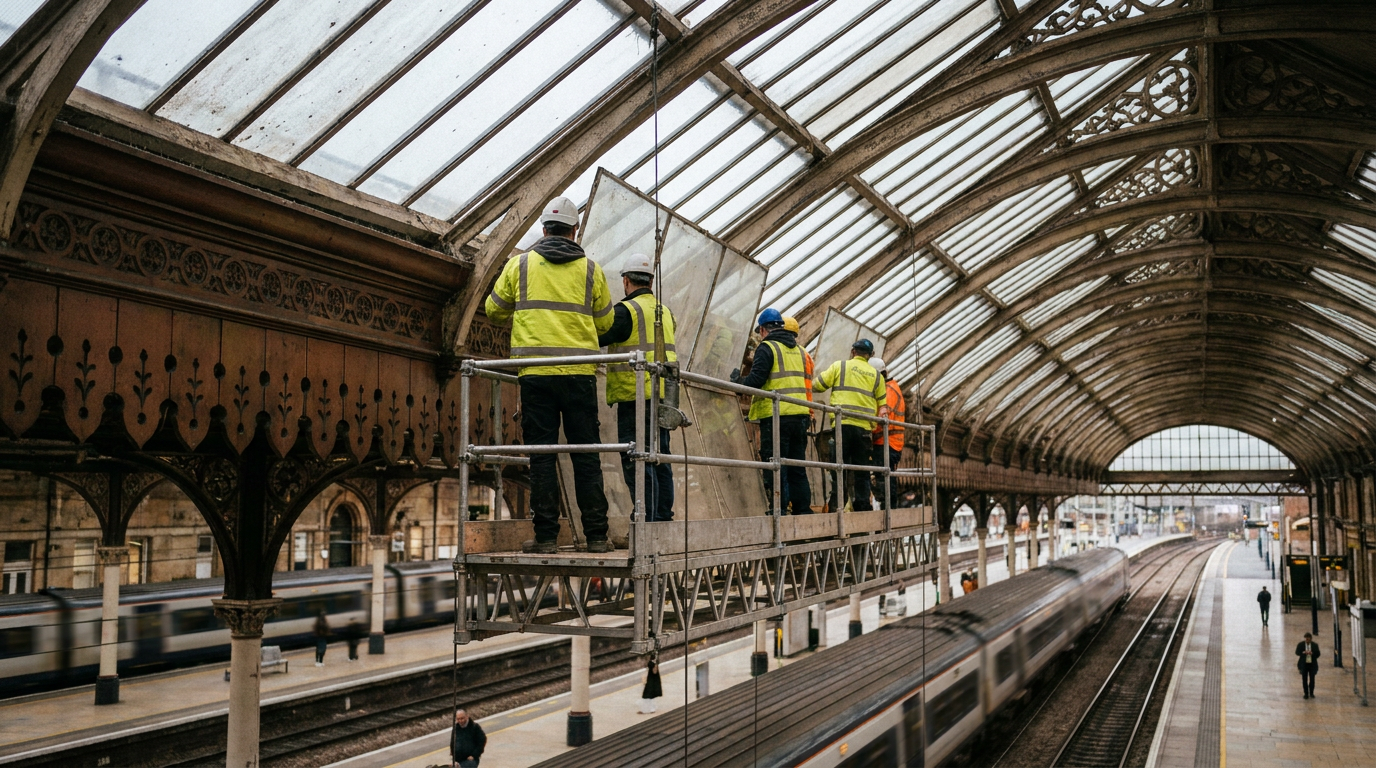
The old glazing over the 19th-century trainshed had become discoloured and covered with lichen. This restricted the daylight reaching the platforms beneath it. Engineers replaced the panels as part of the refurbishment.
Meter readings taken by the project team showed average light levels on platforms 1–10 were between 11 and 56 times their pre-work levels. Those measurements provide the reported comparison between conditions before the replacement and the refurbished roof.
The work also extended to the concourse, where 770 glass panels were replaced. Roof drainage works included new guttering and an increase in rainwater capacity.
Restoring the timber valance
At the front of the trainshed, engineers restored the decorative timber valance to the design used when the station was built in 1874. The feature had been deteriorating before the project began. Its design follows the daggerboards associated with Victorian station canopies, with a shaped, perforated end to each timber slat.
A workshop in Bristol restored or made more than 800 slats for the valance. Each piece was individually numbered so that it could be returned to its designated position during installation. The work therefore involved both retaining existing timber components and crafting replacements for the same decorative feature.
Working around station operations
Morgan Sindall Infrastructure carried out most of its work during normal station operating hours. Sliding scaffold decks suspended above ground level provided access to the roof. This arrangement avoided the need to erect scaffolding on the platforms or concourse, keeping those passenger areas clear of scaffold structures.
Martin Beable, chief operating officer for GBR Anglia, said the project had improved conditions for passengers while limiting disruption. He also highlighted Liverpool Street’s historic role within the rail network.
Although the roof work was complete, the project team was not leaving immediately. Roofing Today reported that the team would remain on site over the following weeks to finish demobilising.