
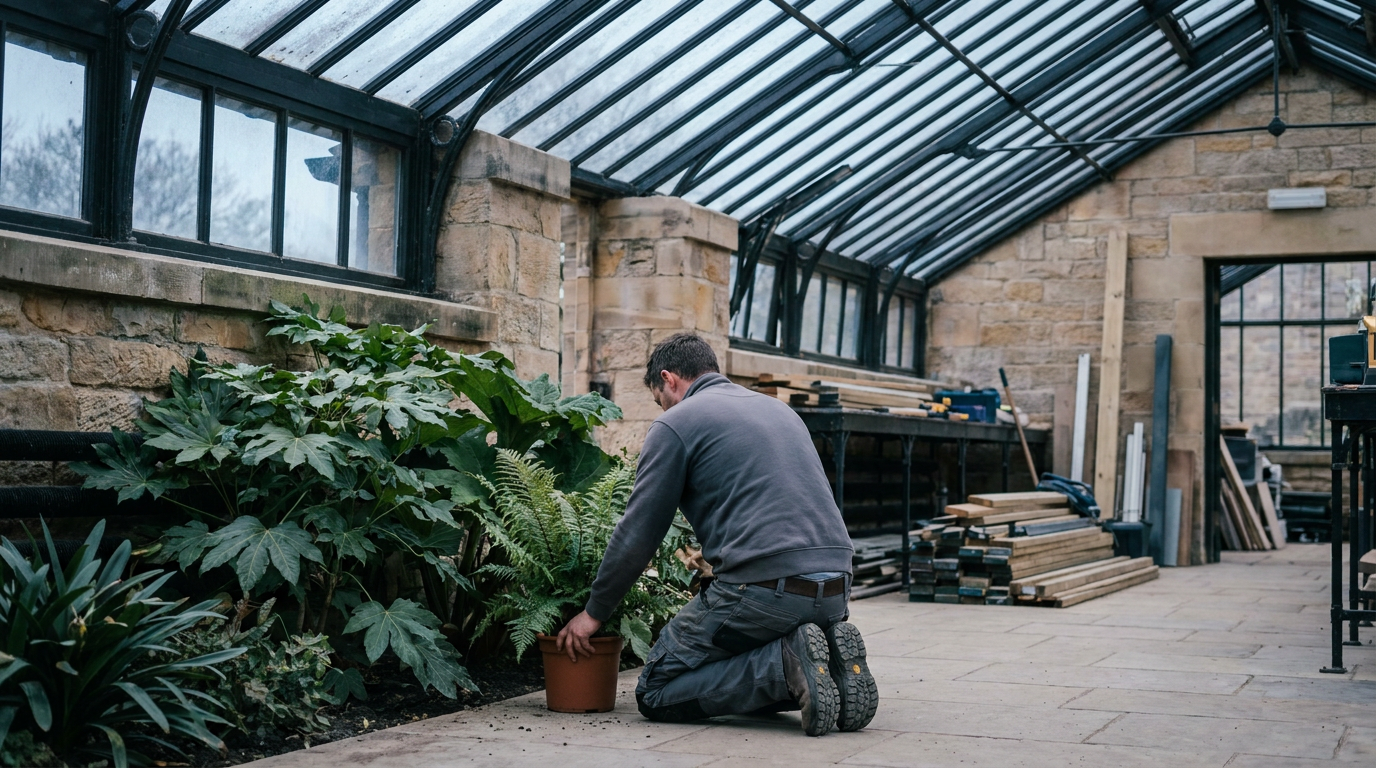
Restoring the palm houses
More than 600 temperate plants have been returned to the Royal Botanic Garden Edinburgh’s palm houses after five years of restoration, according to The Guardian. The buildings combine Georgian and Victorian construction.
The replacement glazing is strong enough to withstand a bird strike. Before refurbishment, the horticultural team had fitted netting inside the buildings to catch glass falling from the deteriorating structure.
The restoration has also preserved the original pulleys and winches used to regulate temperature and humidity. These remain in operation around the collection, which includes ferns that naturally remove toxins from the air.
Professor Julia Knights, the garden’s regius keeper and chief executive, said the interiors now provide a single large space for temperate plants. Among them is a Tasmanian tree fern with a Scottish liverwort growing on its stem. Knights said tree ferns can grow outdoors at the garden’s Logan site on Scotland’s west coast because of its oceanic climate.
Storm damage and access restrictions
Elsewhere in the collection, winter storms can dislodge hundreds of glass panels in a single day. Entry to the glasshouses is prohibited when wind speeds exceed 30mph, leaving staff unable to reach the plants during those conditions.
Horticultural staff were kept out for 20 days in the year before the report. In 2026, there had been 15 occasions when they could not enter. Staff returning after storms have often needed hard hats and other protective equipment to remove broken glass.
Sadie Barber, the glasshouse curator, told The Guardian that falling fragments had severed plants. Broken glazing also allows cold air into tropical growing spaces, exposing collections that staff have cared for over decades to winter temperatures.
Barber described finding a record for a plant lost from the lowland tropical house that identified a storm as the cause. The record did not establish whether cold exposure or a strike from broken glass had killed it.
The collection behind the glass
The garden was established in 1670 by two physicians to teach doctors about medicinal plants. Its work now centres on conservation, and its collections include species that no longer survive in the wild.
The research glasshouses contain rare ginger species, bananas, blueberries and dozens of begonias. The institution also specialises in rhododendrons and ferns. Its scientists have helped develop DNA barcoding, a technology used to identify plant species.
Professor Pete Hollingsworth, the garden’s director of science, said the scale of environmental damage made collections held outside their natural habitats important safeguards. He described the threats facing plants in the wild as severe.
Further glasshouse upgrades await
Many of the other glasshouses are decades beyond their intended service life and are still awaiting upgrades. The completed palm house work therefore leaves other parts of the collection dependent on ageing enclosures.
Water ingress is another cause of losses. Rain leaking through the glasshouses can rot rootstock and sometimes kill plants. Barber said the condition of the buildings directly affected the survival of the collections they shelter.