
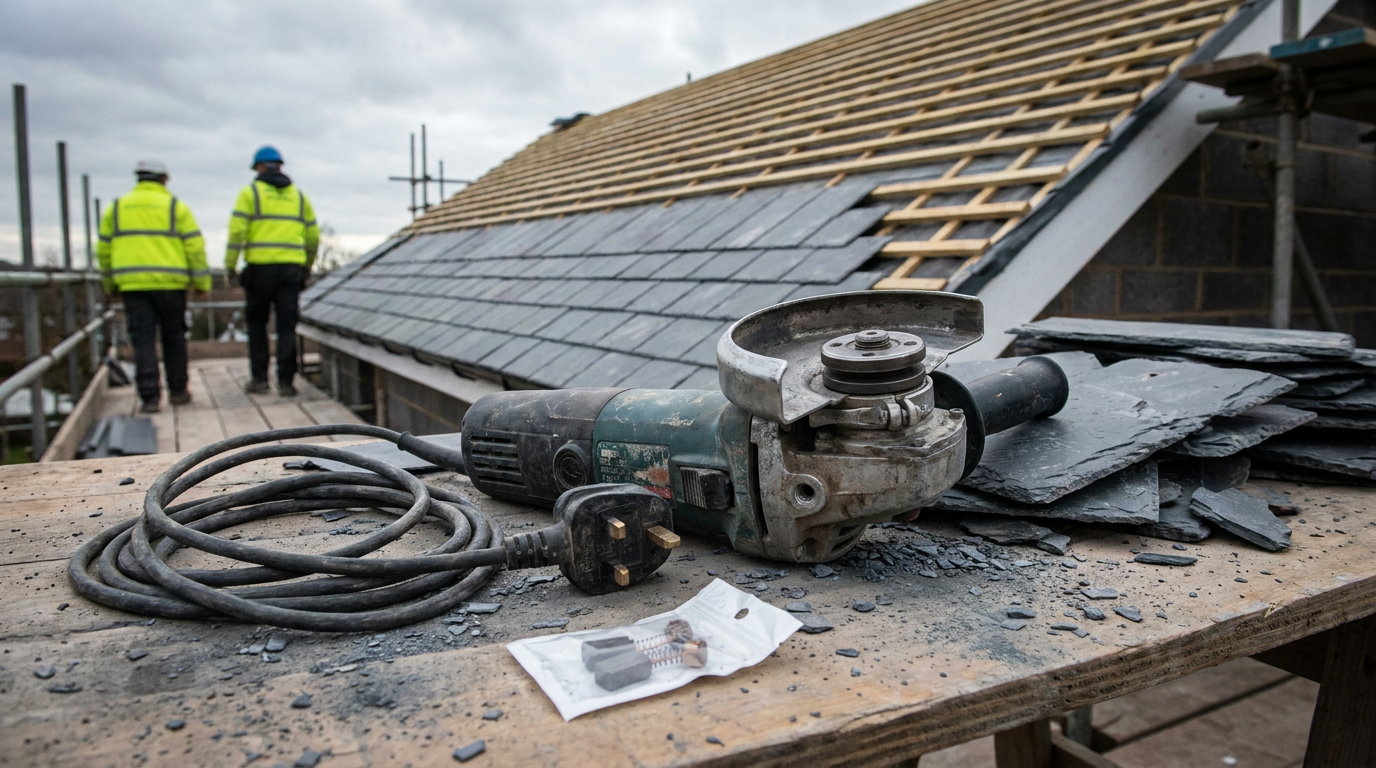
Cables, batteries and switches
A tool that loses power as its lead moves may have a cable fault rather than a failed motor, according to guidance published by Roofing Today on 15 September 2026. Cuts, crushing and breaks inside a mains lead can interrupt the electrical supply. The relationship between cable movement and power loss is one clue to the cause.
The publication advises checking the entire lead, including the points where it enters the plug and tool housing. Repeated bending can concentrate damage at these connections. It says a lead with cuts, crushed sections or exposed conductors needs replacing. Covering damage with tape leaves a risk of electric shock and fire.
For cordless equipment, the battery is a separate potential source of trouble. An ageing pack may lose its ability to retain charge or supply enough current. Roofing Today recommends comparing its performance with a tested, working battery from the same tool platform under the conditions that previously caused the interruption. If the problem stops, its guidance points to replacing the pack rather than investigating the tool further.
The trigger can also cause intermittent operation. Its internal contacts control the electrical connection each time the operator presses it. Dust, grit and wear can make those contacts unreliable even when the motor and supply cable remain serviceable.
Replacement switches must match the exact tool model. Roofing Today describes the part as inexpensive but warns that incorrect wiring creates a safety risk. It advises using a repair shop where the person carrying out the work is unsure about the internal connections.
Dust and cooling
Slate, tile and cement dust can accumulate inside a tool through the airflow used to cool its motor. As deposits obstruct the ventilation openings, less cooling air can pass through the housing. The resulting rise in temperature can trigger a protective shutdown, the publication explains.
Its maintenance advice is to disconnect the tool from the mains before clearing the vents. The article suggests using an air line or canned compressed air from both sides of the housing, rather than pushing the accumulated dust further inside. It says daily cleaning may be appropriate for a grinder or wall chaser used throughout a dusty cutting job.
A tool that has stopped because of overheating should cool completely before being used again, according to the guidance. Restarting while the motor remains hot can immediately activate the same protection. This distinguishes a cooling problem from faults that interrupt the electrical connection.
Brush wear and motor damage
In a brushed motor, carbon blocks transfer electrical current to the rotating commutator. They gradually shorten in use. Roofing Today says abrasive dust drawn through the housing can wear both the brushes and the surface they contact, with angle grinders and wall chasers particularly exposed because they operate close to the material being cut.
The article also names SDS drills, jigsaws and circular saws among tools used for roofing work, including work on decking and battens. It identifies grinders and chasers as the equipment most likely to show early problems with brush wear and obstructed vents during prolonged dusty use.
Signs associated with worn brushes include increased sparking visible through the motor vents, an acrid smell and reduced power under load. Intermittent operation that changes when the tool is knocked is another symptom listed by the publication. It gives a remaining brush length of about 5–6mm as its replacement guide.
Roofing Today advises replacing brushes together, using a pair matched to the tool’s make, model and type number. Its procedure starts with unplugging the equipment before removing the brush caps. The replacements should sit squarely in their holders, followed by a brief run without load to check their operation. Brushless motors have no carbon brushes to replace.
The publication puts the cost of a replacement pair at a few pounds and describes the work as taking about ten minutes with a screwdriver. It contrasts that with the consequences of continued arcing, which it says can damage the commutator and eventually the armature. Once the commutator is scored, the article says repair is rarely economical for a site tool.