What happened
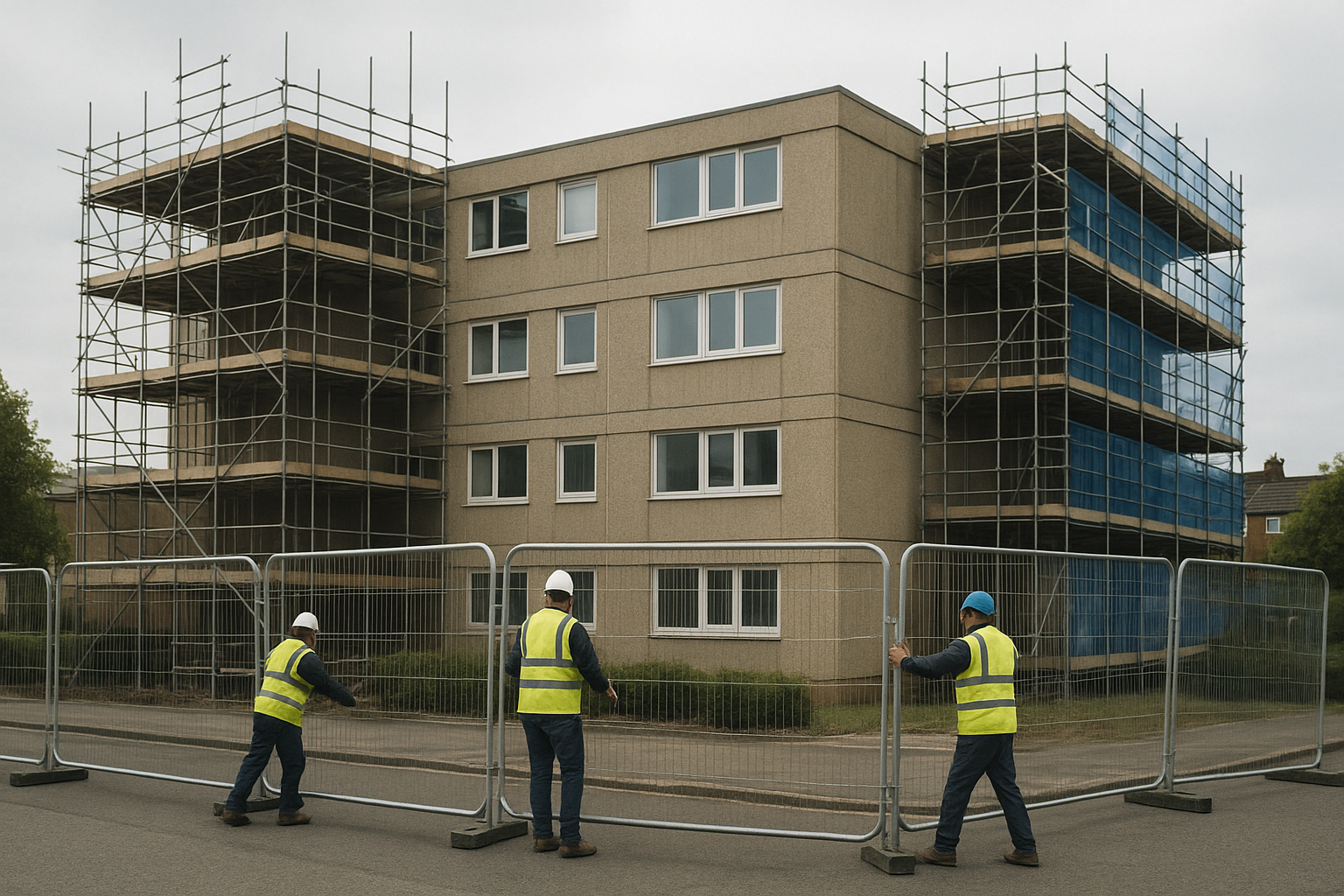
According to the Ministry of Housing, Communities and Local Government (MHCLG), 1,266 out of 2,682 residential buildings with life-critical fire-safety defects had not begun remediation works under the developer remediation contract by 30 September 2026. This accounts for 47 per cent of all buildings covered by the scheme. Of these, 857 buildings had no remediation plan in place. Work was marked completed on 613 buildings, including 110 awaiting final building control sign-off.
The developer remediation contract, brought in during 2023, was signed by 53 companies. It requires the signatories to carry out or fund repairs to significant fire safety defects found in residential buildings at least 11 metres tall, specifically those the signatories developed or refurbished in England between 5 April 1992 and 4 April 2022. The contract states that works must be done “as soon as reasonably practicable” but does not specify a fixed completion deadline.
The background
The developer remediation contract was designed to address fire-safety concerns in the wake of high-profile incidents, aiming to ensure that developers take responsibility for their buildings. The contract’s lack of a fixed completion date has reportedly led to varying speeds of progress. Multiple legal disputes have arisen between developers, contractors, and product manufacturers about recouping the costs of repairs under the contract.
Besides the developer contract, the MHCLG is tracking four other remediation programmes. The Cladding Safety Scheme, which is open to both private- and social-sector buildings, showed that only 10 per cent of covered buildings had completed remediation by the end of September 2026. The majority, 70 per cent, were reported as “in programme,” while the rest are either in planning or at various stages of progress.
The Building Safety Fund, focused primarily on private sector buildings with unsafe cladding, had seen completed works on 77 per cent of its caseload. Social housing being self-funded had completed remediation works on 65 per cent of the buildings in that programme. The ACM (aluminium composite material) remediation scheme, covering buildings clad with the material used on Grenfell Tower, showed the highest completion rate: 93 per cent of its 516 identified high-rise buildings had finished works, with 21 of those awaiting building control sign-off. Only one ACM-clad building under that scheme had not yet submitted a remediation plan.
These programmes sometimes overlap, with some buildings falling under more than one remediation track. Altogether, as of the end of September, MHCLG was monitoring 4,732 residential buildings at least 11 metres tall in England with unsafe cladding. Of this total group, 2,111 buildings, or 45 per cent, still had no repairs started.
What people are saying
The figures from MHCLG highlight the scale of uncompleted work and the slow pace in some areas of remediation. Industry sources note, according to Construction News, that disputes among developers, contractors, and materials manufacturers have hindered progress. These disputes are often about responsibility and cost-sharing under the developer remediation contract, contributing to the delay in starting and completing works.
Social landlords and housing associations, involved through the social housing self-funded programme, have reportedly made more progress in percentage terms compared to private developers. However, private developer-led initiatives, notably those signed up to the developer remediation contract, are facing the largest backlog in terms of both planning and delivery of remediation.
Under the Cladding Safety Scheme, few buildings have reached the stage of completed repairs. According to the MHCLG’s reporting via Construction News, most buildings in this scheme remain “in programme,” with applications, assessments, and procurement ongoing.
What happens next
There is no government-set deadline for completion in the developer remediation contract, which campaigners and some industry organisations have highlighted as a potential risk to timely delivery. Progress is expected to continue to be tracked through regular MHCLG updates. Legal challenges between stakeholders are set to play a part in how financing and responsibilities are allocated.
For buildings without any remediation plan or works started, options may include further intervention from government or the intensification of resolution efforts between building owners and developers. The focus for all schemes remains on accelerating the pipeline from assessment to completion, particularly for those buildings with no current remediation schedule.
As the ACM programme nears completion, attention is shifting to the larger numbers of buildings within the developer remediation contract and Cladding Safety Scheme where work is yet to begin. Contractors and specialists active in this market are likely to see ongoing demand for services as the government and industry work through the outstanding caseload.