What happened
United Living (South) has been granted permission by the High Court to continue a claim worth £7.35m against Hawkins\Brown for alleged façade and fire-safety defects at the Wenlock Building in Islington. The decision follows Hawkins\Brown's attempt to have the proceedings struck out, based on a prior £1.575m settlement between the architect and contractor in March 2023. The High Court’s judgment, handed down by Mr Justice Eyre on 3 November 2026, rejected Hawkins\Brown’s position that the case should not proceed.
Hawkins\Brown argued the dispute had already been resolved with the 2023 settlement agreement. The architect stated that as both parties knew about potential additional defects before the settlement, the current claim represented an abuse of process. United Living denied the assertion, maintaining that the latest claims relate to defects not covered by the earlier agreement.
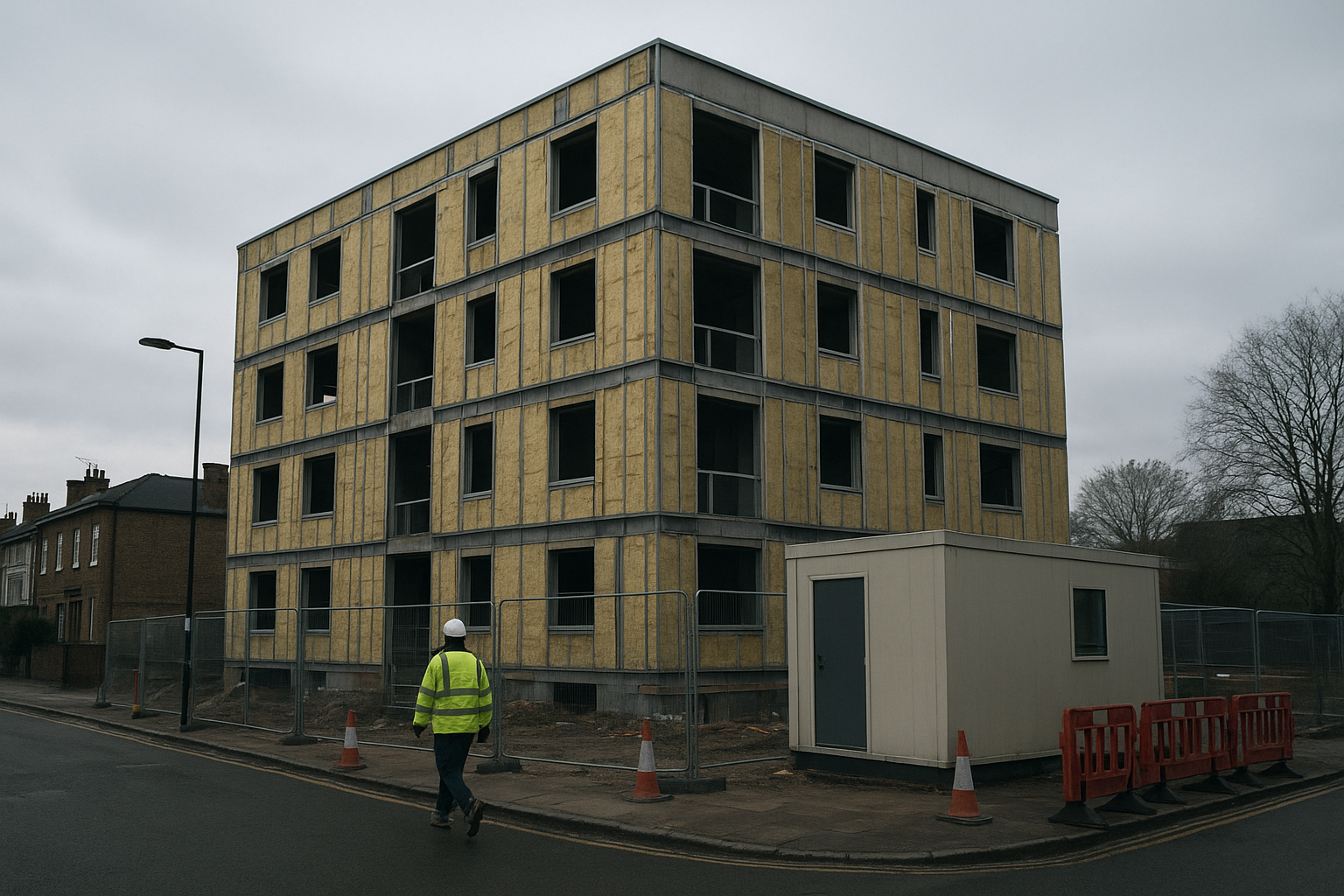
The Wenlock Building sits at 50–56 and 60 Wharf Road, London. It is a nine-storey structure, completed in 2009. United Living carried out the conversion under a design-and-build contract. Following the Grenfell Tower fire, new safety concerns emerged about the building’s façade and insulation.
The background
The primary focus of United Living’s claim is alleged fire-safety and environmental performance failures. The issues identified include combustible insulation, timber cladding, missing fire barriers, and problems with the Velfac façade system. According to United Living, these were not remediated in the earlier financial settlement.
The new claim seeks £3.14m for the replacement of the Velfac façade and window system and £4.2m for remediation work to alleged deficiencies in the building’s structural steel fire protection. United Living alleges that Hawkins\Brown did not discharge its professional obligations concerning the design and inspection of the building envelope and associated safety measures.
Hawkins\Brown’s position is that United Living should have raised these defects during the discussions that led to the 2023 settlement. The architect said the contractor had received early expert advice in January 2023 that suggested grounds for further claims and should have disclosed this at the time.
Mr Justice Eyre stated in his judgment that the 2023 agreement only resolved the particular claim it addressed and did not act as a general release covering all future or unknown defects. He said United Living's omission to flag possible further claims at the point of settlement did not make the present proceedings abusive.
What people are saying
Hawkins\Brown denied liability for the defects alleged by United Living and described the new claim as improperly withheld during prior negotiations. The company said that it acted within its professional remit during both the design and inspection phases of the Wenlock Building conversion.
United Living maintains that these facade and fire-safety defects were not part of the resolved matters covered by the 2023 settlement. The contractor insists that full details of the latest defects only began to surface after more in-depth investigative work, supported by expert advice in January 2023.
The court heard that United Living based its latest legal action on specific advice suggesting unaddressed issues with the Velfac system and fire protection to structural steel. Mr Justice Eyre agreed that this information had not been sufficiently developed to constitute an abuse if pursued after the settlement. The judgment clarified that Hawkins\Brown's initial settlement did not bar subsequent claims relating to uncovered defects.
Proceedings continue to decide whether Hawkins\Brown, or any of the other defendants, are liable for the alleged failings, and no final decision has yet been reached on responsibility for remediation or damages.
What happens next
United Living’s £7.35m claim against Hawkins\Brown will now proceed through the court system. The ruling does not establish liability but simply allows the claim to move forward. The next stage will involve further hearings and, potentially, a full trial to examine the evidence and determine responsibility for the alleged defects.
Dovista UK and Dantaag have also been named as defendants in the ongoing proceedings. Their roles and potential liabilities are expected to be explored in the subsequent phases. The outcome could have implications for other parties responsible for the design, supply, or installation of the affected façade and cladding system.
All parties will have the opportunity to present detailed technical evidence on the nature and extent of the alleged faults relating to insulation, cladding, fire barriers, and the Velfac window system. Any decision on damages or required remedial works will depend on the findings established during the forthcoming trial or settlement negotiations.
The timeline for resolution remains uncertain. It is not yet clear whether further settlements will be reached before a trial or whether all claims will be tested fully in court.