
Research and training
A retrofit materials library, research workshop and heritage science laboratory are planned for the facility, according to Roofing Today. It will also provide space for sharing technical knowledge. The combination is intended to support research and the development of solutions suited to traditional buildings.
Colin Tennant, head of technical conservation at HES, said the new location would increase the centre’s capacity for training and heritage science research. He said its work would have benefits across the UK, with the facility forming part of a shared setting for heritage knowledge and specialist skills.
Tennant linked the expanded provision to the protection and care of a range of historic structures. He identified castles, aqueducts, forts and canals alongside traditional buildings as part of the built heritage the wider centre would support.
Traditional buildings and the site
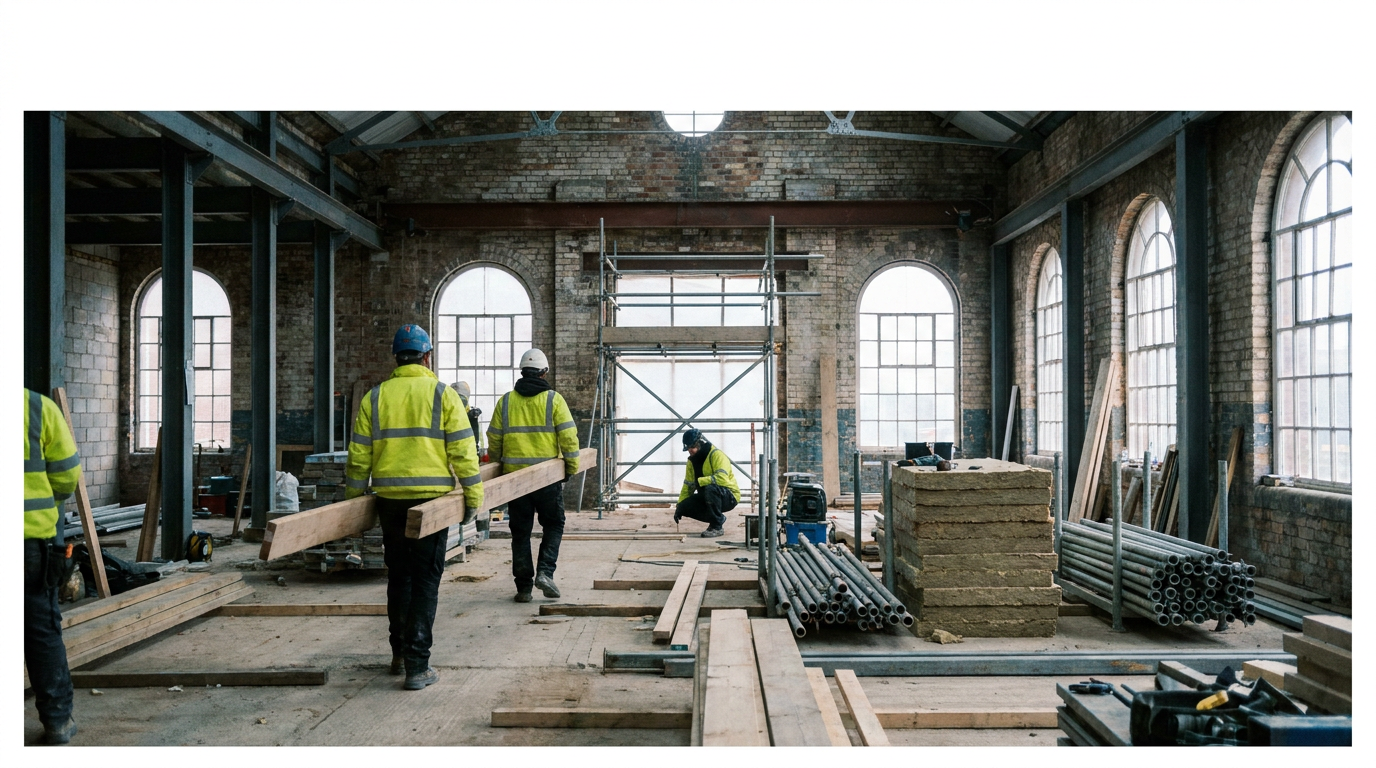
The host development, Scotland’s Centre of Excellence for Canals and Traditional Skills, is taking shape at the former AG Barr Irn Bru factory in Camelon. Roofing Today reported on 23 September that major construction work was progressing both inside and outside the building. The factory conversion is intended to bring heritage knowledge and specialist skills together.
A 2024 audit of Scotland’s historic environment estimated that almost 500,000 buildings were of traditional construction. These accounted for around 18% of homes, 24% of offices, 33% of shops and 41% of public buildings. The report identifies the retrofit of this building stock as an important part of meeting Scotland’s national net zero targets.
Public preview
Some of the heritage science equipment intended for the Retrofit Centre will be available for the public to see at the Engine Shed in Stirling on 26–27 September 2026. The event will offer a preview of equipment that will support the facility’s research work.
Visitors will also be able to learn about the wider centre of excellence project. Information will cover future opportunities in heritage skills, volunteering and learning, extending the event beyond the display of scientific equipment.