What happened
Chancellor John Healey introduced his Autumn Budget on 28 October 2026, setting out policies aimed at steering the UK through current economic challenges. The Office for Budget Responsibility (OBR) projects UK economic growth at 1.3% for 2026, with forecasts revised down to 1% for 2027. The OBR attributes much of this outlook to the impact of war in the Middle East, which has led to higher oil and gas prices and increasing inflation.
Key measures announced include upcoming changes to self-assessed income tax for the self-employed from 2029. This will move self-assessment to smaller, more frequent payments. Tax policy for business owners will be made more consistent when withdrawing money from their firms. The minimum wage will rise by 3.9% for both workers aged 21 and over, and 18 to 20-year-olds. Low-income pensioners with income up to the full State Pension will gain a new tax-free allowance.
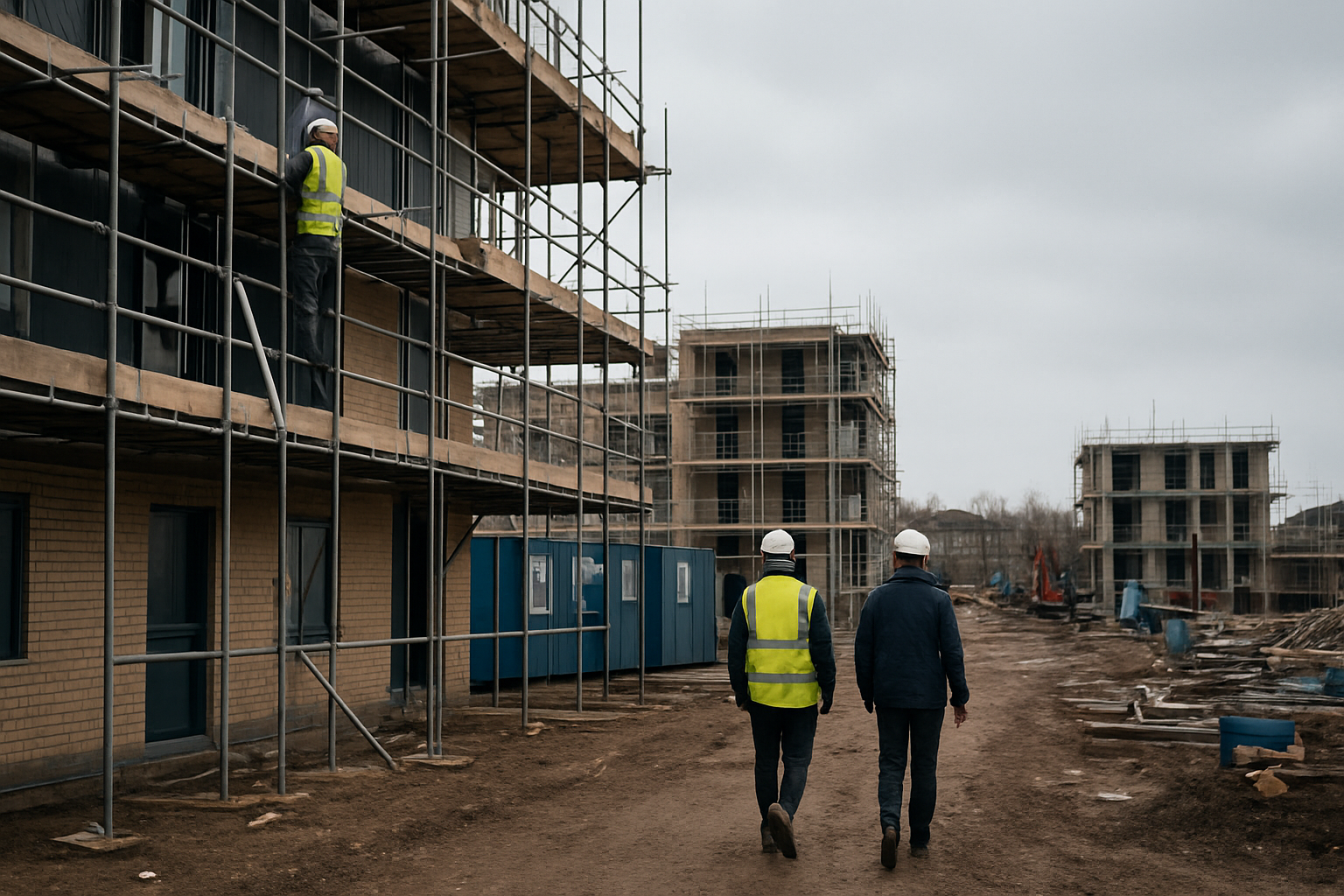
For housebuilders, the Chancellor confirmed a freeze on further changes to building regulations, except for essential building safety amendments, and the removal of biodiversity net gain rules for brownfield developments. He pledged an extra £1.5bn for the Social and Affordable Homes Programme, raising government investment in the scheme to over £40bn across 10 years. The Your First Home equity loan scheme was also confirmed, allocating £4.7bn to support 70,000 first-time buyers in accessing 20% equity loans, with eligibility limits set by household income and location.
A plan to fund training for apprentices under 25 in Small and Medium Enterprises (SMEs) was also introduced, tied to the new Youth Guarantee employment programme. Additional funding was announced for energy support payments to households and for local authorities to assist residents affected by energy costs.
The background
The Chancellor described the budget as a response to global and domestic pressures, highlighting the need for fiscal stability. The OBR has downgraded growth forecasts since March, partly due to international conflict and energy price volatility. Policy changes are aimed at providing stability for the construction sector by avoiding frequent regulatory amendments and by targeting brownfield redevelopment.
Regulatory adjustments include a commitment to no new building regulation changes during the current Parliament except those related to building safety, and an exemption from biodiversity net gain rules for certain brownfield sites. These plans are intended to streamline housing delivery and address viability issues encountered by developers. The Social and Affordable Homes Programme's new funding increase is aimed at delivering 10,000 additional homes.
The Your First Home scheme is intended to support those unable to reach the housing ladder, with regional income caps reflecting market differences between London and the rest of England. Training support for younger apprentices is bundled with other youth employment and skills measures, with the government providing up to £820m for youth employment schemes over three years.
One-off energy support payments and local authority funding seek to assist those most affected by energy cost rises, as inflation remains high due to global factors. The budget also increases the profits surcharge for banks temporarily and introduces new allowances for pensioners.
What people are saying
The Construction Products Association (CPA) expressed disappointment, stating that the budget did not sufficiently address immediate pressures for manufacturers and the construction industry. Noble Francis of the CPA noted that the Your First Home scheme will not launch until April 2027, potentially causing new home buyers and builders to wait, which may worsen the ongoing downturn. Francis also pointed to the lack of immediate delivery for the Social and Affordable Homes funds, suggesting that on-site activity from this funding is not expected until mid-2027 at the earliest. The CPA raised concerns about the government’s support scheme for industrial energy users, stating that many manufacturers reliant on gas, not just electricity, are excluded from assistance after facing steep gas price rises.
The National House Building Council (NHBC), represented by CEO Paul Turner, welcomed measures such as the First Home scheme and regulatory stability, stating that these could give housebuilders increased certainty to invest. Turner also highlighted the positive impact of removing biodiversity requirements for brownfield sites and acknowledged the high demand for affordable housing. He cautioned, however, that there remains a pressing need for construction skills investment to match the industry's expanding pipeline.
Dr David Crosthwaite of the Building Cost Information Service (BCIS) noted that while support for affordable housing has strengthened, private developers will continue to face significant cost challenges with no further major regulatory changes planned until the end of the Parliament. Crosthwaite pointed to the need for clarity and reassurance on the long-term infrastructure pipeline, suggesting that confidence could be undermined by the delay and recent reallocations of capital funding.
John Wilkinson of BAM UK & Ireland emphasised the potential of the infrastructure pipeline to generate economic growth if matched by clear delivery plans. Wilkinson drew attention to the need for a reliable pipeline to encourage recruitment, investment and training across the sector, and highlighted ongoing workforce shortages, forecasting a need for an additional 41,200 construction workers annually until 2030.
The Federation of Master Builders (FMB) raised concerns over rising labour costs for small builders, with CEO Brian Berry cautioning that increased minimum wages may be hard for firms operating on tight margins to absorb. Berry described the new homebuyers’ scheme as having limited direct impact for smaller housebuilders, calling for measures that enable SMEs to benefit from pipeline growth.
Nikki Davis, Principal of Leeds College of Building, welcomed the new funding arrangements for construction skills and technical education, noting support from local government and continued efforts to attract more young learners into training for the sector.
Ashley Dickson of VELUX regarded energy bill support as positive, highlighting the need for futureproofed homes combining insulation, shading and ventilation to withstand more extreme weather, and referencing the effects of recent Warm Homes Plan announcements on vulnerable households.
What happens next
The income tax changes for the self-employed are to start in 2029, while the increase in the profits surcharge for banks will begin in January 2027 for a period of 15 months. The National Minimum Wage rise takes effect from April 2027. The Your First Home equity loan scheme is set to start in April 2027, targeting households below specified income thresholds.
Social and Affordable Homes Programme funding raises the ten-year allocation and is expected to result in construction of 10,000 additional homes, though industry groups warn that site activity from this funding may not begin before the second quarter of 2027. Training costs for under-25 apprentices in SMEs will be covered from 2026 under the Youth Guarantee plan.
The government has committed to publishing an updated infrastructure pipeline by the end of 2026. The review of rail infrastructure costs and the introduction of a data centre covenant will be watched for their implications on construction output and specialist contractor capacity. The effects of increased support for energy bills and changes to brownfield development policy will become clearer as these policies are implemented in 2027 and beyond.