What happened
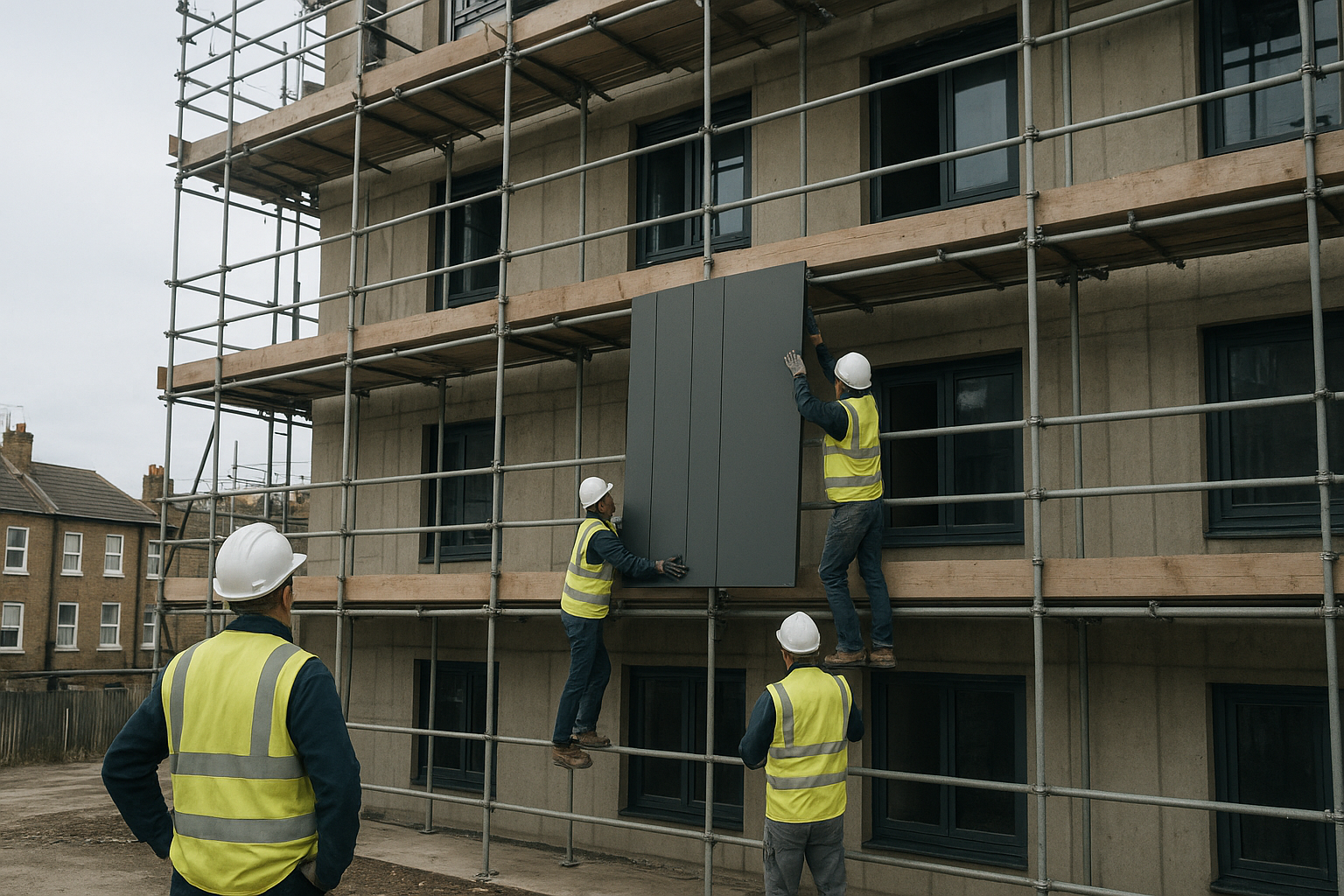
Hackney Council has formally appointed Wates to complete the external envelope of four residential buildings in phase 2b of the Britannia Project. This follows the collapse of Ardmore Construction Group Ltd, the main contractor previously responsible for the job. According to a council report seen by Construction News, Wates is taking on a JCT Prime Cost Building Contract 2024 with a maximum value of £25.1m, excluding VAT.
The appointment was approved by Hackney Council’s Cabinet procurement and insourcing committee on 2 November. The scope for Wates includes completion of the design, procurement and installation of the external envelope work. Two of the buildings in the phase were in an advanced stage when Ardmore went into administration in June. However, neither was watertight at that time, the report states.
Wates first took control of the site on 30 June under a licence to occupy. The contract was formalised through a pre-construction services agreement (PCSA) on 25 August. During the PCSA period, Wates worked with the council and supply chain to re-procure the unfinished elements.
The new contract’s focus is on making the buildings watertight and ensuring that critical-path works are prioritised. Hackney Council says this approach is intended to limit costs and mitigate losses stemming from Ardmore’s failure.
The background
Ardmore was awarded the £200m full contract for phase 2b of the Britannia Project in July 2023. The scope included 51 homes for social rent, 30 for shared ownership, and 290 for private sale. These sales were planned to help fund earlier parts of the scheme, which included a new leisure centre, school and public realm improvements.
Phase 2b was estimated to be six to nine months from completion at the time Ardmore went into administration on 11 June 2024. The council report notes that the revised practical completion date for Wates’ external envelope package is now targeted for the end of November 2027. This represents a delay of around one year compared with original projections.
The council report warns that costs arising from the need to rectify potential Ardmore defects or certify untested elements are expected. These costs may become the subject of a future claim on the project’s performance bond or guarantee. As of July, the council considered it no longer feasible to keep phase 2b within its previously approved capital budget of £196.9m, largely due to Ardmore’s collapse.
In September, Hackney Council postponed £281m in capital spending. Most of this was attributed to disruptions in the construction sector, including issues caused by Ardmore’s administration.
What people are saying
A recent council report states that the fastest way to minimise losses was "to prioritise efforts to commence the completion of the external envelope of the four buildings." The report says this focus would make the buildings watertight more quickly and ensure priority was given to critical path tasks.
The council added that risks remain in connection with Ardmore’s work, especially regarding potential defects or components that have not been certified. It noted that future spending to resolve these issues is likely, although claims against performance guarantees may be possible.
Previous cabinet updates warned of challenges in delivering the completed scheme within the initial capital budget, emphasising the impact of Ardmore’s administration on project finances.
What happens next
Wates is now contracted to complete the external envelope package. The recovery works are expected to reach practical completion by November 2027. Hackney Council will bring a second contract—the JCT Prime Cost Building Contract 2024 for the remaining internal and landscape works—to committee for approval in spring 2027.
The council continues to engage with the existing supply chain to move the project forward. It is also undertaking testing and certification of existing work to address any defects left by Ardmore.
Budget implications from Ardmore’s collapse remain under review. The project team will seek to offset any additional costs through future claims against performance bonds or guarantees.