What happened
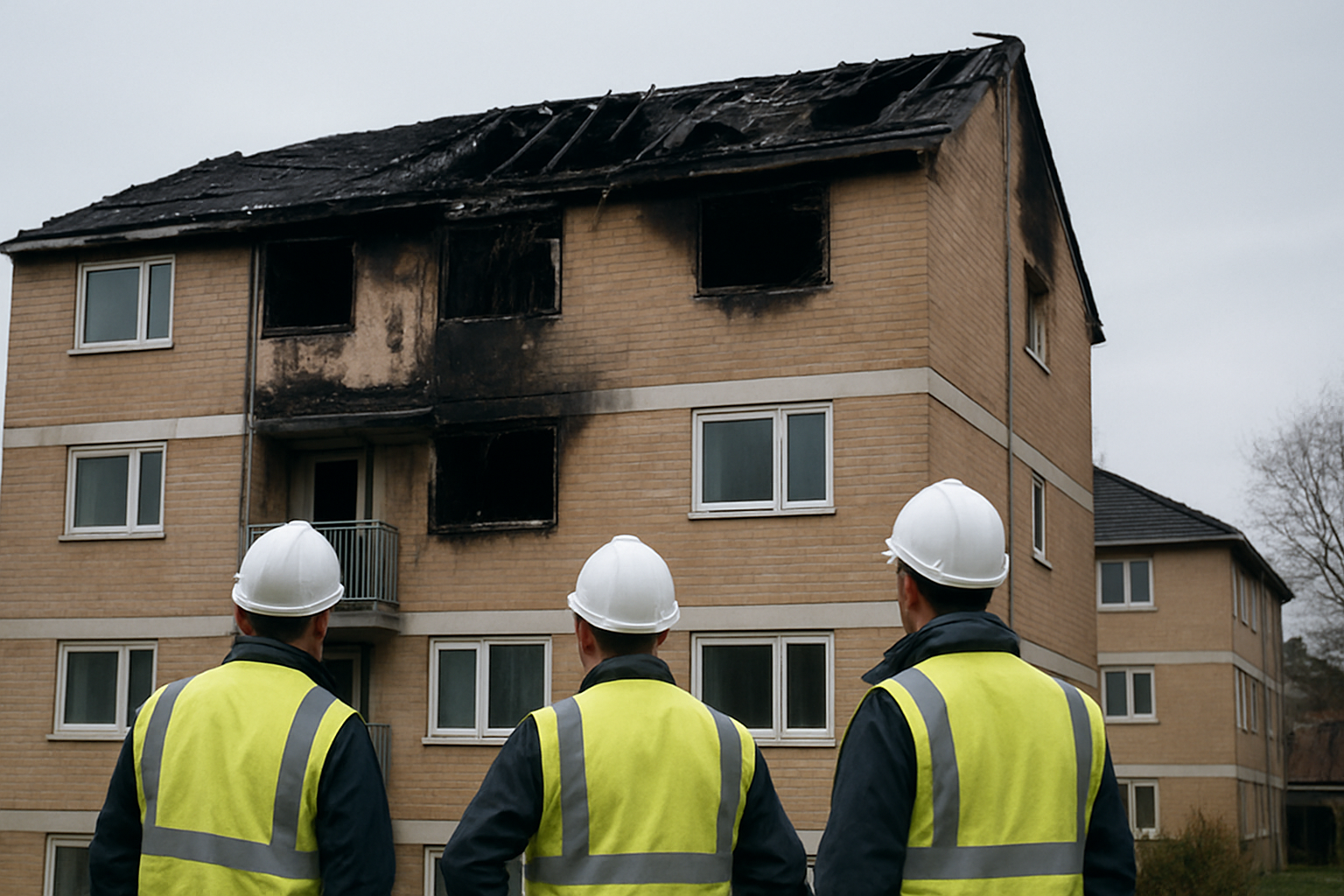
Four subcontractors working for C Watkins Plumbing Limited were installing an air source heat pump on the roof of the Old Telephone Exchange residential development in Staines-upon-Thames. The incident occurred on 26 July 2024. According to the Health and Safety Executive (HSE), welding work produced sparks that set fire to rigid foam insulation on the roof. The insulation had not been covered at the time of the work.
The HSE found that the fire spread rapidly because the insulation was exposed. The blaze moved across the full roof area before extinguishing itself after burning through the available material. All four workers managed to escape the roof through a single opening leading to a ladder down to Level 14. There were no other exits, no fire extinguishers available, and no way to raise an alarm from the roof.
The HSE launched an investigation into the incident. Their findings reported that C Watkins Plumbing Limited had failed in its duties to plan, manage and monitor hot works on the site. Despite company procedures requiring it, no risk assessment or method statement was provided. A permit to work, required for welding, had not been issued for the roof activities.
At Staines Magistrates’ Court, C Watkins Plumbing Limited was charged with breaching safety regulations. The company pleaded guilty to the offences and was fined £20,000. The court also ordered £8,270 in costs against the company. The plea and sentencing took place in the week before publication of this report.
The background
The Old Telephone Exchange project in Staines-upon-Thames involved roof-level works as part of its redevelopment. The scope of works for C Watkins Plumbing Limited included installation of air source heat pumps. On 26 July 2024, the four subcontractors were conducting welding tasks when the incident unfolded.
The HSE’s investigation revealed the presence of uncovered rigid foam insulation across the roof surface. Welding sparks, which are a recognised ignition hazard, ignited the insulation. The fire, described by the HSE as “self-sustaining”, spread throughout the roof space. The situation escalated quickly because the insulation material burned intensely until consumed, before the fire extinguished of its own accord.
Emergency escape was limited. The only means of leaving the roof was a single opening leading to a ladder to the floor below. The four men were able to escape via this route, but the HSE noted the absence of secondary escape routes or fire-fighting equipment on the roof. There were also no alarm systems available to alert other site personnel or summon assistance from outside.
C Watkins Plumbing Limited, based in Ramsgate, Kent, held policies for managing hot works such as welding. However, the requirements were not followed for this particular task. The HSE concluded that failure to complete a risk assessment, to provide a method statement, or to issue a permit to work directly contributed to the cause and escalation of the fire.
What people are saying
HSE inspector Stephanie Hickford-Smith gave a statement at the time of sentencing. She said C Watkins Plumbing Limited "failed to follow its own procedures for hot works" and "did not assess the risks", meaning "no control measures were in place". She added the four operatives "were lucky to escape" and that a different outcome could have occurred if the fire had blocked their escape route or if they had not reacted as fast.
Marc Harris, Group Services Director at C Watkins Plumbing, responded publicly following the court case. He said the company "was very sorry" about the fire and "accepted responsibility from the outset". He stated C Watkins Plumbing had "co-operated fully with the HSE and pleaded guilty at the first opportunity". Harris noted the court found "our culpability to be low", citing the company's "long-standing safety record".
He outlined several actions taken since the fire. C Watkins Plumbing Limited has completed a full independent review of its safety systems. Welding has been removed from the company’s site activities. The workforce has undergone retraining. Risk assessments and induction procedures related to hot works have been updated. The company continues to audit its hot works and safety procedures regularly, according to Harris.
What happens next
Fire and Rescue Services attended the scene and recorded evidence of the fire’s aftermath. The HSE has closed its investigation following the sentencing.
C Watkins Plumbing Limited must pay the fine and court costs imposed. The company’s updated policies mean welding is no longer carried out on its sites as of the aftermath of this incident. The HSE’s actions underline the importance placed on following internal risk procedures and legal requirements for hot works, including permits and fire safety equipment on site.
Remediation works required to repair fire damage on the roof of the Old Telephone Exchange site have not been detailed in public statements. Management of hot works, fire escape provision and access for emergency equipment on live sites may face new scrutiny from clients and contractors following this case. On similar projects, site leads may review their own procedures to avoid similar failures in risk management.