What happened
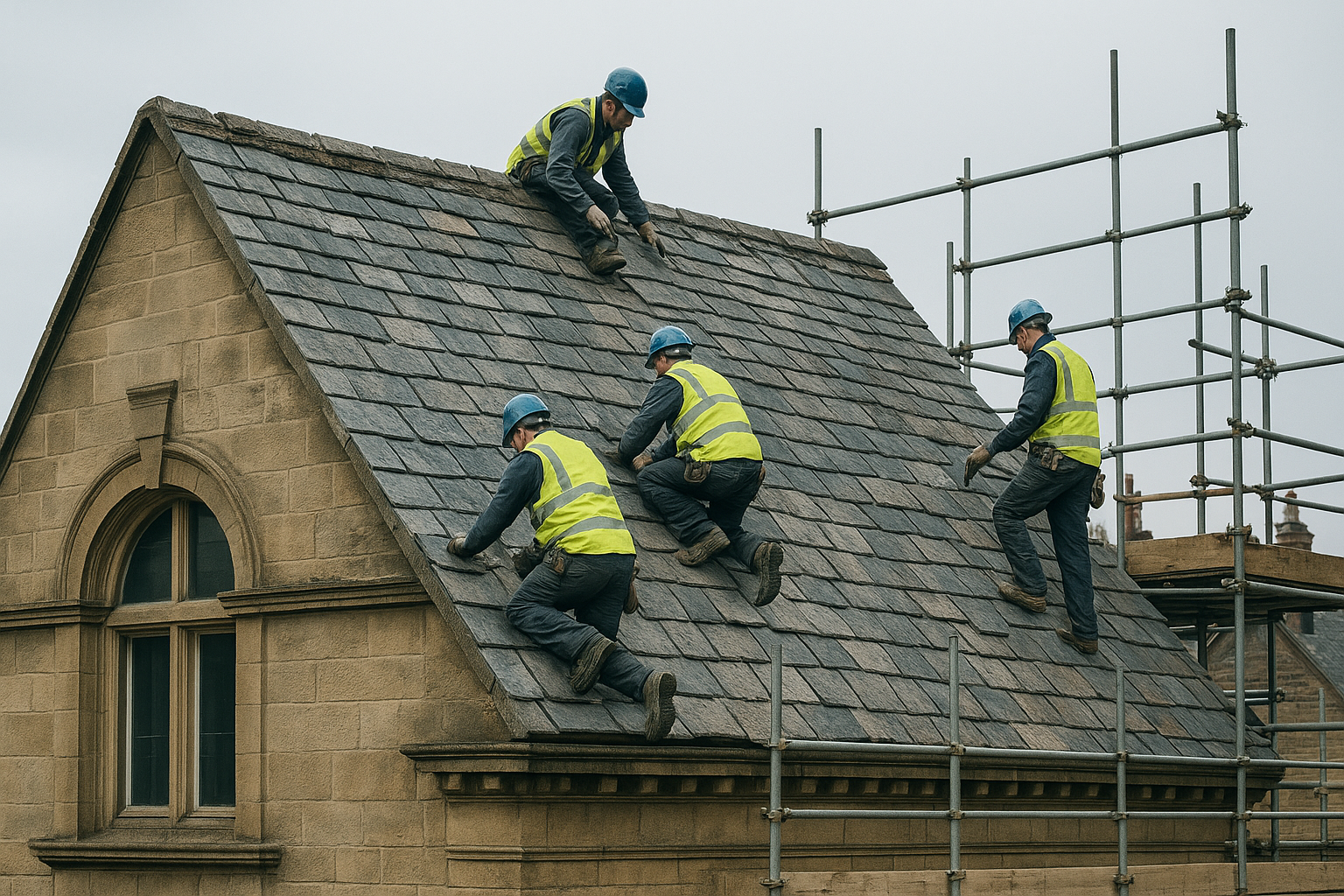
Kettering’s Grade II listed library and adjoining Alfred East Gallery have been formally reopened after an extensive restoration and roof replacement programme. The reopening ceremony, led by HRH The Duke of Gloucester, marked the completion of the works. The restoration was necessary after water ingress caused major interior damage, leading to the temporary closure of both buildings. Main contractor Messenger managed the project, with conservation architects Oliver Architecture providing specialist guidance. The buildings had suffered progressive deterioration of their traditional Collyweston stone slate roofs, the failure of which caused safety concerns and a partial ceiling collapse. Temporary coverings were installed to prevent further damage while restoration plans progressed. During closure, library services continued from a modern extension at the rear of the building.
The background
Kettering Library first opened in 1904, funded partly by a donation from Andrew Carnegie. It features sandstone brickwork, Ketton stone window surrounds, and Collyweston slates, a roofing material locally associated with Northamptonshire heritage. The adjacent Alfred East Art Gallery opened in 1913 after a gift of 70 artworks from Sir Alfred East. Both buildings form part of Kettering’s cultural quarter, alongside the Manor House Museum and Gardens. In recent years, rain and age led to water ingress that damaged interiors and made the buildings unsafe. The Grade II listed status of the library and the neighbouring war memorial required a careful conservation approach. Collyweston stone slates, integral to the buildings’ character, were removed, preserved, and reinstated to retain the historic appearance. The programme included new insulation and underlay, repairing a small asphalt roof, and restoring the library’s cupola.
What people are saying
Messenger, the main contractor, credited its experience in traditional roofing and heritage conservation as key to delivering the project. The firm highlighted the role of skilled roofers, masons, joiners and other trades in restoring the buildings. Messenger commented that reinstating the Collyweston roofs and returning the buildings to public use was a rewarding achievement. The company also collaborated with North Northamptonshire Council and Oliver Architecture throughout the process. During the Royal visit, HRH The Duke of Gloucester toured the library and gallery and met project team representatives. He participated in unveiling a commemorative plaque to mark the reopening.
Local engagement featured strongly in the project. A public ‘Tag-a-Tile’ initiative allowed community members to decorate slates for the roof, each numbered and recorded, creating a record of public involvement. In addition, stonemasonry students from Moulton College gained practical conservation experience on site.
The restoration work
Protection of the historic structures was achieved through full scaffolding and temporary roofing. Special care was taken to safeguard the nearby listed war memorial in the Manor House Gardens during building work. The principal conservation task was to remove and store the original Collyweston slates for reuse. Replacement materials were sourced only as necessary, maintaining the maximum amount of original roofing. Restoration also involved new insulation and weatherproofing to improve energy performance and prevent future water damage.
Specialists in heritage roofing led the reconstruction, employing techniques suited to the traditional materials and the buildings’ original design. A smaller area of asphalt roofing was replaced, and the library’s cupola, a prominent rooftop feature, was restored to its previous condition.
Community involvement
The restoration team created opportunities for public participation. Through the ‘Tag-a-Tile’ project, 121 Collyweston slates, one for each year since the library opened, were decorated by local people before being incorporated into the Sheep Street elevation, hidden from exterior view but numbered and recorded for posterity.
Moulton College students benefited from the works by observing skilled craftsmen and learning conservation methods. This aimed to encourage future generations to take up heritage trades vital for maintaining listed buildings and traditional roofing.
What happens next
Kettering Library and the Alfred East Gallery have been restored to safe condition and reopened for public use. The project has secured these historic buildings for future generations and reopened heritage community services in the town centre. The reintroduction of the Collyweston slate roof restores their architectural character.
The reopening was marked by the Duke of Gloucester’s visit and the unveiling of a commemorative plaque. The library and gallery will continue to serve their original purposes within the town’s cultural quarter. Messenger and the project team credited the collaboration with local stakeholders and the public as central to the successful outcome.